
I was recently interviewed by Authority Magazine and I am so grateful for the opportunity to discuss emotion-triggered eating, diet culture, and why eating issues are rarely simply about food. I’m sharing the conversation here because of the importance of compassionately supporting mental and emotional health, issues at the heart of both Why Did I Just Eat That? and my forthcoming book, Breaking the Emotion-Triggered Eating Cycle., which I wrote with Suzanne Appel Duffy
Women In Wellness: Lisa D Ellis of Integrating Nutrition On The Five Lifestyle Tweaks That Will Help Support People’s Journey Towards Better Wellbeing
Authority Magazine Editorial Staff
9 min read
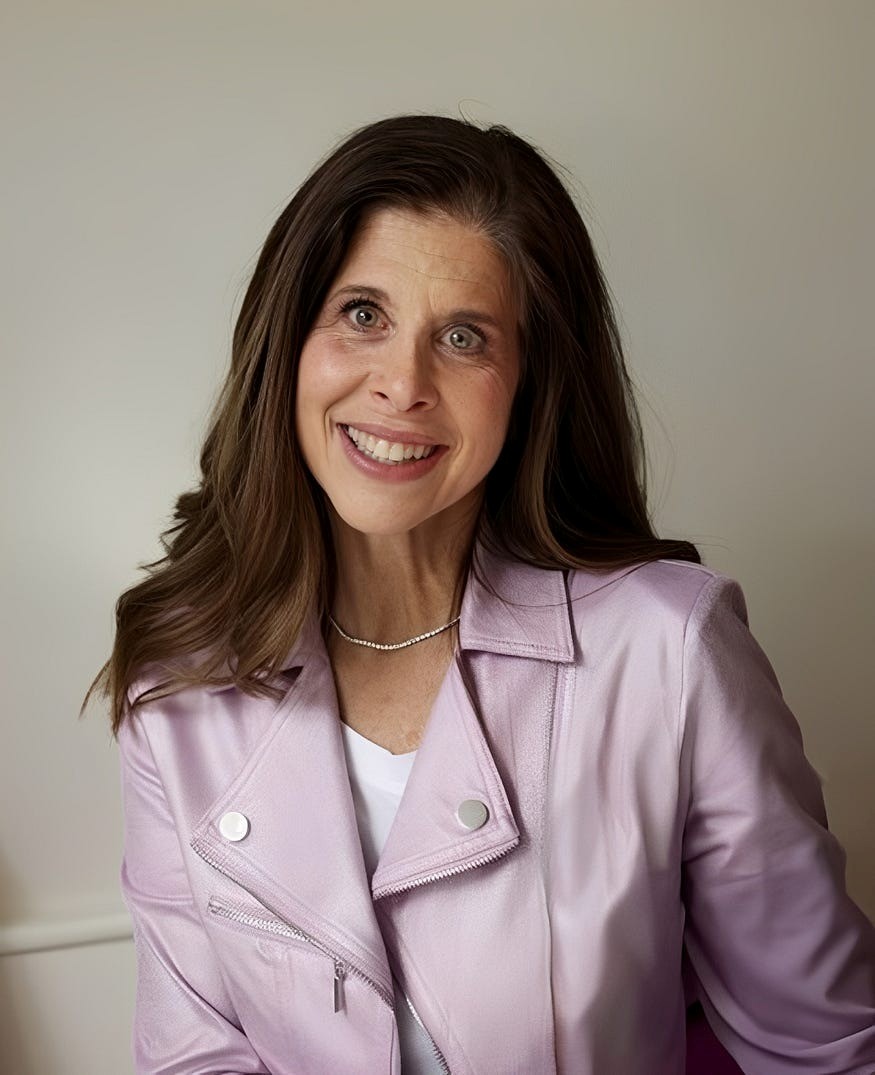
Eating issues are rarely just about food. They’re often connected to stress, shame, anxiety, trauma, loneliness, and they show up in the ways people have learned to cope. To support mental and emotional health with compassion is a major prerequisite to supporting the whole person.
Today, more than ever, wellness is at the forefront of societal discussions. From mental health to physical well-being, women are making significant strides in bringing about change, introducing innovative solutions, and setting new standards. Despite facing unique challenges, they break barriers, inspire communities, and are reshaping the very definition of health and wellness. In this series called women in wellness we are talking to women doctors, nurses, nutritionists, therapists, fitness trainers, researchers, health experts, coaches, and other wellness professionals to share their stories and insights.
As a part of this series, we had the pleasure of interviewing Lisa D. Ellis.
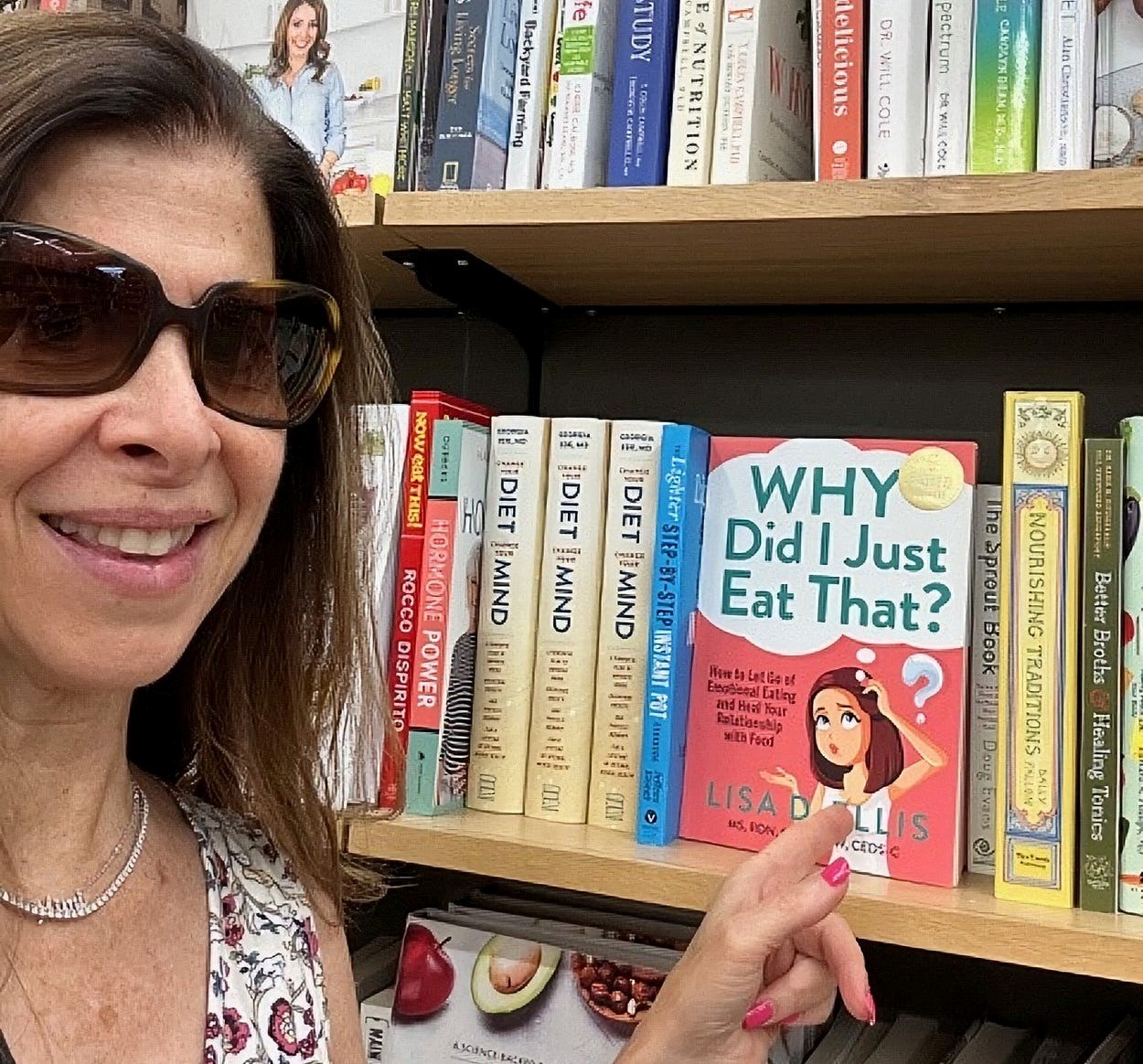
Lisa D. Ellis is a Registered Dietitian, Certified Eating Disorders Specialist, and nutrition therapist in private practice in the New York City area, with expertise in eating disorders and emotion-triggered eating. She is the author of the Amazon Best-Seller Why Did I Just Eat That?: How to Let Go of Emotional Eating and Heal Your Relationship with Food, and the forthcoming Breaking the Emotion-Triggered Eating Cycle. A recognized expert in nutrition and emotion-triggered eating, Ellis has contributed her insights to publications including Redbook, Glamour, The New York Times, U.S. News & World Report, Fortune, Runner’s World, and Today’s Dietitian.
AM: Thank you so much for joining us in this interview series! Our readers would love to “get to know you” better. Can you share your “backstory” with us?
LE: My motivation to be a Registered Dietitian and nutrition therapist began in high school. (Or maybe before that: I can remember my summer camp counselor giving seven-year-old me clear popsicles while the other kids were enjoying ice cream cones because, as she said, “Girls like us need to watch our figures.” ) Today many girls feel shamed by social media. When I was a kid, it was teen magazines. Like lots of girls my age then, I struggled with fad diets, compared how I thought my body looked versus the idealized bodies of models, struggled with weight fluctuations, and tortured myself with perfectionism. I transferred to Simmons University to double major in nutrition and psychology; where I got my B.S. I then earned an M.S. in clinical nutrition from New York Medical College, before eventually getting my MSW.
AM: Can you share the most interesting story that happened to you since you started your career? What were the main lessons or takeaways from that story?
LE: I began my career in private practice as a fairly traditional dietitian, with most clients coming to see me wanting to lose weight. My whole perspective changed one day when a mother brought her humiliated twelve-year-old daughter into my office and screamed at the sobbing girl about hiding food. I felt so powerless; this poor kid clearly needed more than just nutrition advice. Telling this child to eat less cake and more celery would never address her real problem, which was rooted in emotional and psychological issues. So I returned to school and earned my MSW at Fordham University. That’s when I expanded my professional focus beyond meal planning into therapy, adding to nutrition strategies guidance on emotion-triggers, family dynamics, self-soothing, shame, and body trust; basically reframing and empowering my clients’ relationships with food. In addition to my one-on-one work, I’ve written two books to help people beyond my client base, 2024’s Why Did I Just Eat That?, and the upcoming Break the Emotion-Trigger Cycle, which is a journal-based guidebook that helps readers maintain and empower the process of healing their relationship with food… especially in moments of duress.
AM: It has been said that our mistakes can be our greatest teachers. Can you share a story about a mistake you made when you were first starting? Can you tell us what lesson you learned from that?
LE: I was treating a teenager for an eating disorder, and the mom was very anxious about her child’s issues, the disorder itself, and my approach to therapy. So as a result, I spent more energy on creating relationships with the mother than her daughter, my actual client, who I hadn’t built as solid a therapeutic alliance with. The daughter ended up demanding another therapist because she felt I had gotten too chummy with her mother. It was an important lesson. While it’s certainly important to connect with the parents and gain trust when working with minors, it is critical that the initial focus be to create trust and develop a therapeutic alliance with your client.
AM: Let’s jump to our main focus. When it comes to health and wellness, how is the work you are doing helping to make a bigger impact in the world?
LE: As I mentioned in my backstory bio, I began my professional focus in nutrition, and expanded into psychotherapy because food struggles are rarely only about food. I think we might divide the impact I bring into two buckets. The first bucket is all about the one-on-one care I (and my associates) give my clients, targeting care to address individual needs. The goal is to help them understand the dynamics of their specific challenges and then we co-create tools to best empower them to heal their own relationships with food. The second bucket is about my media outreach; sharing my insights with magazine and websites, and more recently, through my own books. One thing it is very important for me to do is remove shame and stigma from one’s relationship with food and body image. For instance, I don’t use the term “emotional eating” negatively, because there are times when an emotional impact on food choices is normal and okay. I prefer the term “emotion-triggered” because it puts the focus on the actual triggers that sometimes provoke people into making detrimental eating choices, and not the emotions.
AM: Can you share your top five “lifestyle tweaks” that you believe will help support people’s journey towards better wellbeing? Please give an example or story for each.
LE: 1. Let go of black-and-white thinking
One major positive lifestyle tweak is learning to be aware of when we slip into all-or-nothing thinking, especially around food. I once had a client complain, “I can’t eat just one cookie. I can eat none, or I can eat the whole bag.” That sort of thinking can make people feel trapped. So the goal is to begin finding the gray area, where one cookie can simply be one cookie. Good enough is good enough.
- Work with small changes
Because when people try to change too much at once, it often backfires. I had a client who said she couldn’t eat vegetables, so I suggested she chop one up and bury it in her mashed potatoes. She agreed, and reported afterwards that it was okay for her. I suggested she try the same thing with two veggies. Eventually two vegetables became three, and then more. Small changes are often what can make bigger, more challenging changes possible.
- Practice mindfulness
Practicing mindfulness is a great perspective to adopt, and one of the best ways to interrupt automatic eating. I had a client who would eat every meal in front of the TV, barely noticing the food. So we practiced eating together slowly, using all of our senses: looking at the food, smelling it, noticing texture, the taste, and satisfaction of eating itself. When we focus our attention with a sense of gratitude, food can become a joyful experience, not just an autopilot behavior.
- Set an intention before challenging situations
Planning ahead can be very helpful. I had a client who had anxiety around Thanksgiving with extended family. They felt anxious about overeating, eating in front of others, and being judged over what was on their plate. I encouraged them to ask themself before the meal, “What experience do I want to have?” and to focus on the intentions, “I want to enjoy the company there,” or “I don’t want to leave feeling overstuffed.” (In fact, I go much deeper into this subject with guidance and practical advice in my new book, coming out at the end of the year, Breaking the Emotion-Triggered Eating Cycle.)
- Set realistic expectations and stay as emotionally flexible as possible
Well-being doesn’t come from chasing perfection, which will inevitably lead to frustration and disappointment. We should focus on learning how to respond when things don’t go as planned. If we learn to set more realistic expectations and give ourselves a break while staying flexible, we are much more likely to build an empowered relationship with food (and our bodies and ourselves). As I mentioned earlier, good enough is good enough; as I explained to clients who give up on eating in ways that are beneficial for them because they feel they can’t do it “perfectly.”
AM: If you could start a movement that would bring the most amount of wellness to the most amount of people, what would that be?
LE: I’d love to start a movement around helping people learn to trust their own bodies, (some for the first time since they were toddlers!) That means learning to listen to and honor our hunger, satiety, and fullness cues, instead of constantly overriding them with food rules, shame, or the latest diet trend. To do that fully, we’d need to recognize and reject the assumptions, biases, and demands of diet culture, which leads people to mistrust (and often loathe) themselves in favor of some largely unachievable beauty standards.
AM: What are your “5 Things I Wish Someone Told Me Before I Started” and why?
LE: 1. I wish someone had told me how difficult it would be to work with insurance in private practice. Of course, I knew there would be paperwork, but I did not fully understand how crazy complicated, time-consuming, and frustrating the insurance system could be for providers and my clients too!
- I wish someone had told me how much marketing is involved in building and maintaining a private practice. Being good at helping people doesn’t mean much if they don’t know you exist and what you offer.
- I also wish someone had told me how important the technique of motivational interviewing would be. One of the core principles of Motivational interviewing is when you roll with resistance instead of confronting it. That means first acknowledging what the client is saying, then asking questions in a non-judgmental way so the client becomes more open to the idea of change. (I mentioned that earlier in this questionnaire, in the case of the client who became open to trying veggies by starting with small pieces at a time.)
- I had no idea about how pervasive diet culture really is. For a long time, it seems like most people, (including registered dietitians and nutritionists) accepted the assumptions of diet-culture thinking as a normal way to think about food and bodies. I am so grateful that I, and many others, no longer see things that way, because at its extremes, diet culture has caused great harm.
- I wish I had realized earlier that there is a difference between emotional eating and emotion-triggered eating. Not all emotional eating is problematic. It can be completely fine to eat a cozy comfort food meal when you feel homesick. The problem is when food becomes the primary way someone consistently self-soothes in response to emotional triggers. That’s why I use the term “emotion-triggered eating.”
AM: Sustainability, veganism, mental health, emotional health, and environmental changes are big topics at the moment. Other important issues include women’s health, food security, affordable housing, and inclusion. Which of these causes is closest to your heart, and why
LE: Mental health is closest to my heart because one’s emotional struggles affect how they eat, sleep, work, connect, parent, basically care for themselves, etc. Eating issues are rarely just about food. They’re often connected to stress, shame, anxiety, trauma, loneliness, and they show up in the ways people have learned to cope. To support mental and emotional health with compassion is a major prerequisite to supporting the whole person.
AM: What is the best way for our readers to further follow your work online?
LE: I am on Instagram and Facebook (@LisaEllisRDMSW), as well as two websites: one for my practice (https://integratingnutrition.com/) and a companion website for my first book (https://whydidijusteatthat.com/).
AM: Thank you for these fantastic insights! We wish you continued success and good health.